
- 03 Oct 2026
- 4 min Read
Fire Sprinkler System: The Silent Protector on Your Ceiling
Fire can spread fast , but the right sprinkler system can act faster. Explore how fire sprinklers work and protect modern facilities.
INTRODUCTION : A fire sprinkler system is something that is often overlooked until an emergency happens. This guide is different from guides that are full of complicated words. It gives you simple information about fire sprinkler systems, how they work, and how to choose the right provider in India.
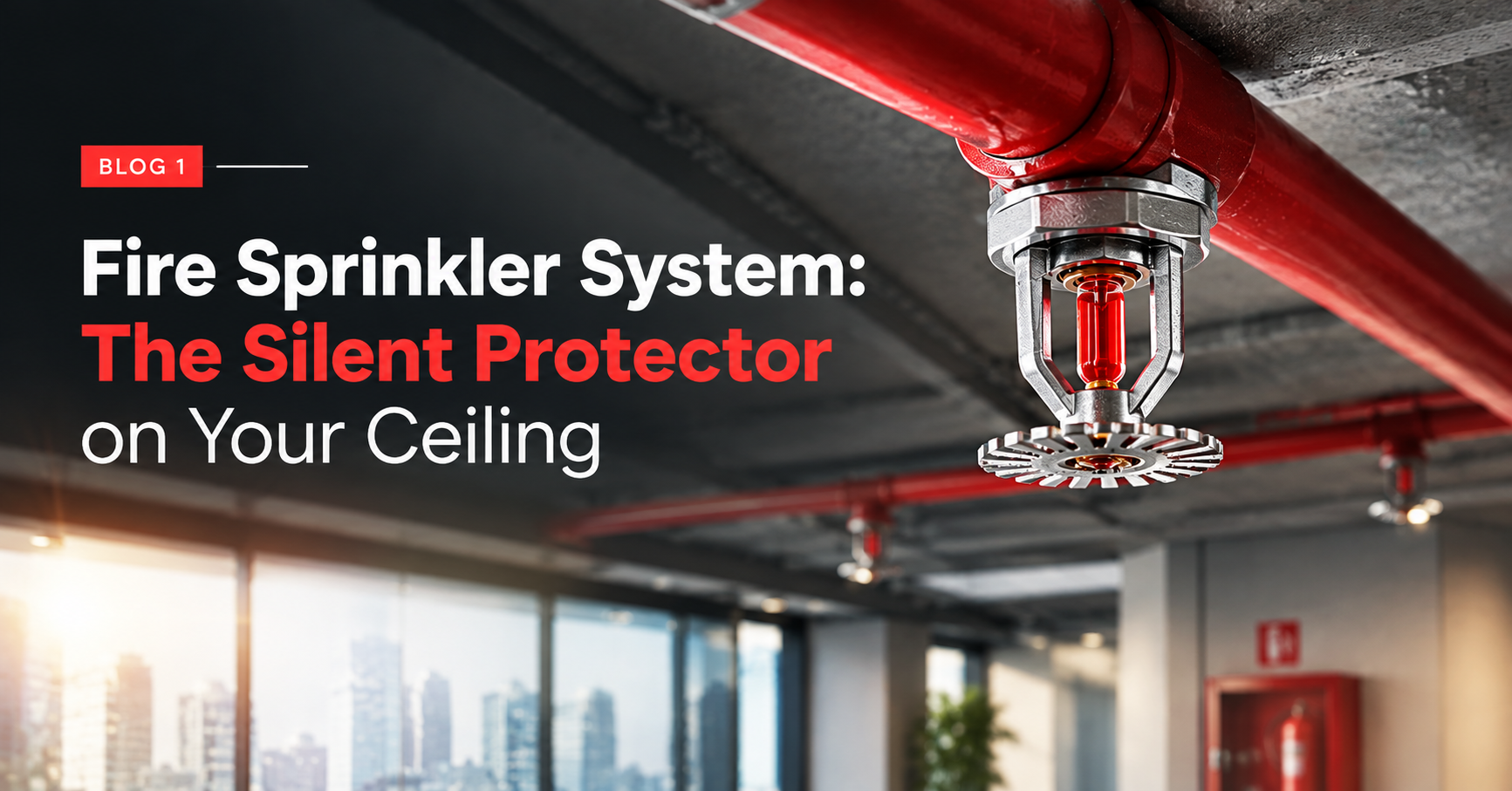
What Is a Fire Sprinkler System? Think of a fire sprinkler system like a protector on your ceiling. It is made up of a network of pipes filled with water that are connected to devices called sprinkler heads. Each sprinkler head activates when the heat reaches its operating temperature, releasing water over the affected area.
The Common Misunderstanding A lot of people think that when there is a fire, all the sprinklers in a building go off and flood everything with water. This is not true. Only the sprinkler head that is closest to the fire goes off, which means that the water damage is limited.
How Does It Know There’s a Fire? Each sprinkler head uses a heat-sensitive element that activates when it reaches its rated temperature, releasing water onto the affected area. When the temperature around the sprinkler head gets to be around 57°C to 79°C, the glass bulb breaks. The metal melts, which opens a valve and lets water out. This happens without any wires or complicated electronics. It works through a simple mechanical process.
How Does a Fire Sprinkler System Work? Step by Step Let’s break it down into steps:
Step 1: Heat Builds Up When there is a fire, the area near the ceiling gets hotter and hotter.
Step 2: The Sprinkler Reacts When the heat gets too high, the glass bulb or metal link inside the sprinkler head breaks, which opens the valve.
Step 3: Water Comes Out The water that is stored in the pipes rushes out through the sprinkler head that's open, and it spreads out like Water is discharged through the sprinkler head at around 9 bar pressure.
Alarm Activation As soon as water starts flowing through the pipes, a switch detects it and sets off the building's fire alarm. In some systems this can also send an alert to the fire department.
Different Types of Fire Sprinkler Systems Not all buildings need the kind of fire sprinkler system. The choice of system depends on what the building's used for:
1. Wet Pipe System This is the most common type of system, where water is always in the pipes and ready to go. Most homes and offices in India use this kind of system.
2. Dry Pipe System In this type of system the pipes are filled with air or water. Water only enters the pipes when the system is turned on, which makes it a good choice for places like parking garages where the temperature can get very low.
3. Pre-Action System This system needs to detect both smoke and heat before it releases water, which makes it a good choice for areas like server rooms or museums where water damage could be very costly.
4. Deluge System In this type of system all the sprinkler heads open at the time and release water everywhere. This type of system is usually used in high-risk places like chemical factories where fires can spread quickly.
How to Choose a Reliable Fire Sprinkler System Provider in India Choosing the company to install your fire sprinkler system is very important. If you make a choice, it could lead to financial loss and safety hazards. Here’s how to make sure you hire a provider:
• Make Sure They Follow the Rules. Look for a provider that designs systems according to Industry guidelines. If they cannot explain these standards clearly, that is a sign.
• Ask for Licenses and Certificates Make sure the company is registered with the fire department. Ask to see proof of project approvals, which are called No Objection Certificates (NOCs).
Look for These Signs of a Good Provider 1. Past Work Experience Choose a provider that has experience with buildings like yours. Whether it is a factory, office, or apartment. Their experience will make a difference.
2. Good Quality Materials While it might be tempting to choose pipes and valves, they can fail and cause problems later. Trustworthy companies use tested and certified materials even if it costs a bit more.
3. Ongoing Maintenance Support Fire sprinkler systems need to be maintained to work properly. Ask if the company offers a maintenance plan and what it includes.
4. Design Team A good provider has skilled engineers who can calculate water pressure, pipe sizes, and other important details correctly, which prevents costly problems later.
5. Don’t Just Pick the Cheapest Option While it might be tempting to choose the price, it is more important to prioritize quality and safety when it comes to fire protection. Compare providers based on their quality, experience, and compliance rather than just their price.
Final Thoughts Fire safety might seem like a concern on ordinary days, but it becomes very important during emergencies. Take your time when choosing a fire sprinkler system provider. Ask questions, check their credentials, and make a decision. This small effort now can help protect lives and property in the future.
For more updates on fire protection, MEP engineering, project insights, practical solutions, and project updates, follow Circuitcraft Technologies on Instagram and stay connected with us for more industry-focused engineering insights.